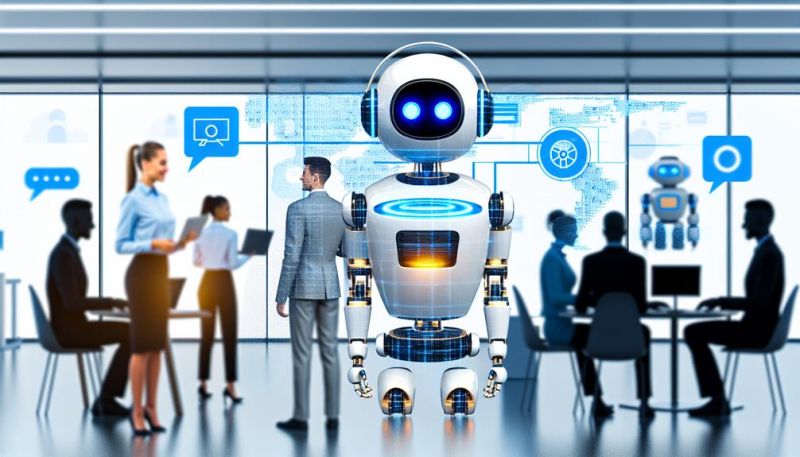
AI in 2026: The Inflection Point for African SMEs and Small Businesses
By 2026, artificial intelligence has moved decisively beyond experimentation. What was once piloted in isolated use cases is now being embedded at the core of business operations. Across industries, AI is no longer being evaluated for potential—it is being relied upon for performance.
For small and medium-sized enterprises (SMEs) across Africa, this shift represents a defining moment. AI is not simply a tool for efficiency; it is increasingly being recognized as the operating backbone of competitive, scalable, and resilient businesses.
Global investment trends have reinforced this transition. Organizations are no longer asking whether AI should be adopted, but how quickly it can be operationalized to unlock measurable value. The result is a transformation that is being felt across every major business function.
AI as an Operational Engine Across Business Functions
Financial Processes: From Retrospective to Predictive
Finance functions are being fundamentally restructured through AI-driven automation. Processes that once focused on historical reporting are now being enhanced with predictive intelligence.
Reconciliations are being automated, cash flow forecasts are being continuously updated, and risk is being dynamically assessed using real-time data. Closing cycles are being shortened, while decision-making is being accelerated through more accurate and timely insights. For African SMEs, where financial agility is often critical for survival, this shift is enabling better capital allocation and improved resilience in volatile markets.
💡 Where are your AI bets this year, and what is moving faster than you expected?
Audit and Compliance: From Periodic Checks to Continuous Assurance
Traditional audit models, built on sampling and periodic reviews, are being replaced by continuous monitoring systems powered by AI. Entire transaction datasets are now being analyzed in real time. Anomalies are being detected as they occur, and compliance is being embedded directly into operational workflows.
This evolution is particularly significant in regulatory environments where trust, transparency, and accountability are increasingly required. AI is not only reducing audit effort but also strengthening governance frameworks.
Sales and Marketing: From Campaigns to Intelligent Growth Systems
Customer engagement strategies are being redefined through AI-powered personalization. Content, pricing, and recommendations are being tailored to individual customer behaviors and preferences. Static campaigns are being replaced by adaptive systems that learn and optimize continuously. As a result, conversion rates are being improved, customer acquisition costs are being reduced, and lifetime value is being maximized.
For SMEs in Africa, where market differentiation can be challenging, AI is enabling a shift from broad targeting to precision engagement.Supply Chain and Logistics: From Linear Operations to Intelligent Ecosystems. Supply chains are being transformed into dynamic, responsive systems.
AI is enabling demand sensing, real-time risk detection, and route optimization. Disruptions are being anticipated rather than reacted to, and logistics networks are being continuously optimized for cost and efficiency. In sectors such as agriculture and retail—both critical to African economies—these capabilities are helping reduce waste, improve delivery timelines, and enhance overall operational reliability.
IT and Technology: From Support Function to Strategic Enabler
IT is no longer operating solely as a support function. With the integration of AI, it is being repositioned as a strategic driver of innovation.
Self-healing infrastructure is reducing downtime. Generative AI tools are accelerating software development. Intelligent security systems are proactively identifying and mitigating threats. This shift is also redefining leadership priorities. The role of IT is increasingly focused on governance, scalability, and resilience rather than just maintenance.
Human Resources: From Administration to Experience Design
Workforce management is being reshaped through AI-driven insights.
Hiring processes are being enhanced with intelligent screening tools. Attrition risks are being predicted before they materialize. Learning and development programs are being personalized to individual employee needs.These changes are enabling organizations to create more engaging, equitable, and future-ready workplaces—an important factor in attracting and retaining talent in competitive markets.
Industry-Level Transformation Across Africa
The impact of AI is not confined to internal business functions. It is also being observed across key industries that are central to African economies.
- Manufacturing is being enhanced through predictive maintenance and automated quality control systems.
- Education is being transformed by adaptive learning platforms that respond to student performance in real time.
- Agriculture is being optimized through precision farming techniques that improve yield while conserving resources.
- Healthcare is benefiting from AI-assisted diagnostics and clinical decision support systems.
- Banking and Insurance are leveraging AI for fraud detection, risk modeling, and streamlined claims processing.
These advancements are demonstrating that AI is not a future concept—it is already reshaping how industries operate and compete.
The Strategic Imperative for SMEs
While the opportunities are significant, successful AI adoption is not accidental. It is being enabled by deliberate and disciplined strategy.Several foundational elements are consistently observed in organizations that are successfully operationalizing AI:
- Strong data infrastructure to support accurate and reliable insights
- Clear governance frameworks to ensure ethical and responsible AI use
- Investment in workforce training to bridge digital skills gaps
- Scalable platforms that can evolve with business needs
For SMEs, the challenge is not only access to technology but also the ability to integrate it effectively into existing operations.
Conclusion: From Adoption to Advantage
2026 is not the year AI arrives—it is the year it proves its value at scale.
Organizations that are embedding AI into their core operations are not simply improving efficiency; they are redefining how business is conducted. They are becoming more predictive, more adaptive, and more resilient. For African SMEs, this represents a unique opportunity to leapfrog traditional limitations and compete on a global stage.
The question is no longer whether AI should be adopted. It is how strategically and how quickly it can be leveraged to create sustained competitive advantage. Those that act decisively will not just keep pace—they will define the next generation of market leaders.
Follow me on LinkedIn for more insights on AI and digital transformation in Africa SMEs.
Learn more about how SME in Africa can systematically adopt AI solutions to optimize business operations and enhance profitability and sustainability.